À Pala De Walsh
http://www.apaladewalsh.com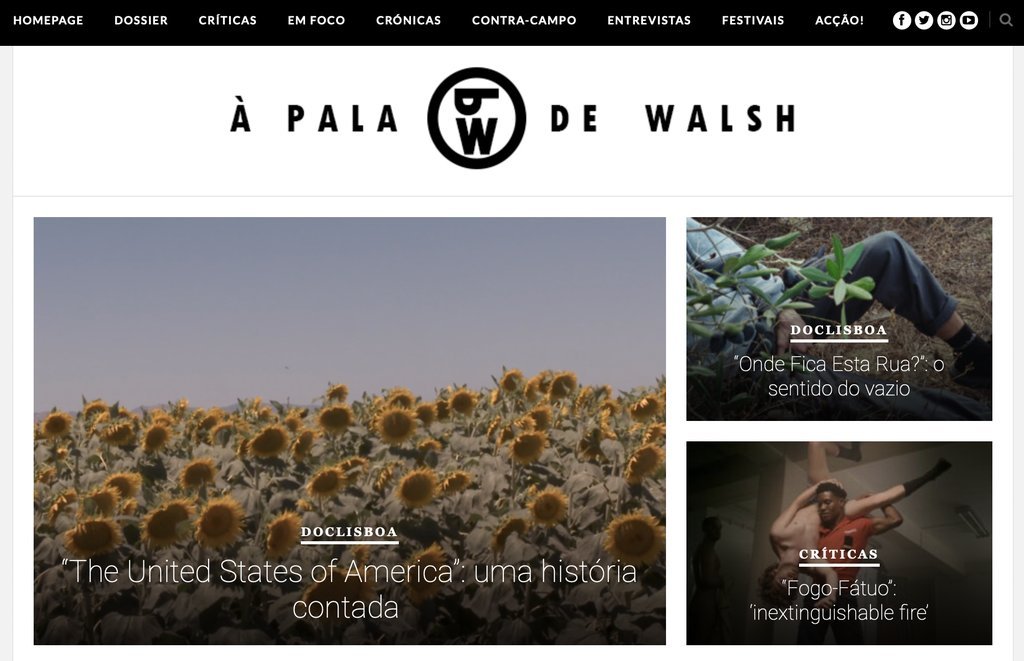
In the first decade of the 2000s, RTP 2, Portugal's state television, cut the budget for films, decreasing screenings. In 2010, two film bloggers petitioned to bring the cinema back. The petition was signed by thousands of people and stirred a conversation about cinema and public service. That petition was the beginning of something else for one of the film bloggers behind the initiative, Luís Mendonça.
À Pala de Walsh was born in 2012, aiming to be a digital space to write film critiques and deconstruct films creatively. "We can write a critique about a film focusing on just two shots of that film. We produce true essays about films, which include our subjectivity and references to our context watching films," Luís Mendonça says.
The team draws inspiration from the work of renowned film critics such as André Bazin and Serge Daney from Cahiers du Cinéma, the French film magazine. In 2015, Cahiers du Cinéma considered À Pala de Walsh the "most important website" about cinema in Portugal.
À Pala de Walsh's name refers to movie directors who wore an eyepatch, specifically Raoul Walsh. It roughly translates as On the Shoulders of Walsh. In Portuguese, à pala has a triple meaning: pala is the Portuguese word for eyepatch; à pala can be read both as the act of standing on the shoulders of something or someone bigger than ourselves, or as the colloquial way to describe something obtained for free.
Accordingly, the website is free and supported by its writers, who work voluntarily by investing their time and energy to publish long-form pieces and original essays about film.
The organisation has occasional partnerships to host film cycles, film debates, and other film-related events to foster the love of cinema.
Source: Oasis Europe
Last updated date: November 2025
started publishing:
Content
Management and team
Founders
Team
Business structure and revenue sources
Transparency
Why is this profile included?
This media outlet is part of our directory because it meets SembraMedia’s inclusion criteria: it produces original content, serves the public interest, and works with independence and transparency. This profile was developed using information provided directly by the media outlet, through surveys or interviews. We aim to keep the information current, but SembraMedia does not guarantee its accuracy or completeness, and recommends verifying any key details with the media organization.