Seguimiento.Co
http://www.seguimiento.co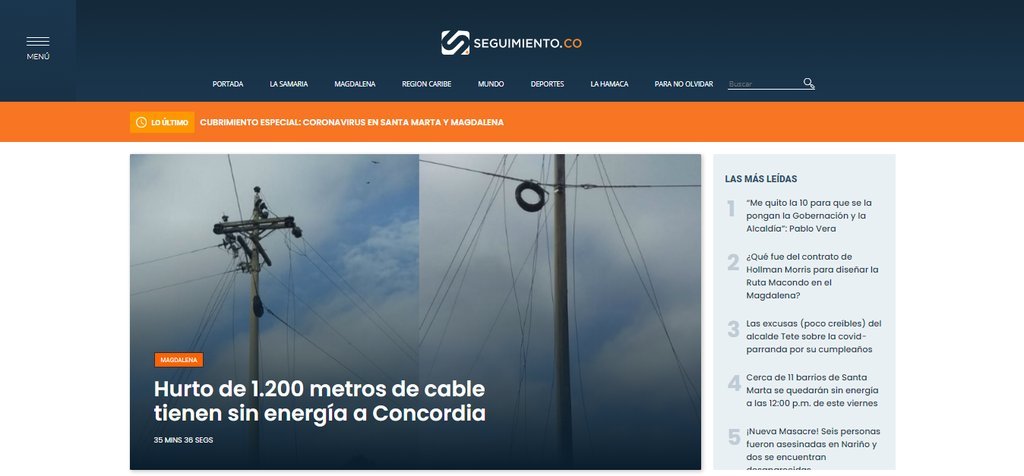
Source: SembraMedia
Last updated date: April 2025
started publishing:
Content
Management and team
Founders
Team
Business structure and revenue sources
Transparency
Why is this profile included?
This media outlet is part of our directory because it meets SembraMedia’s inclusion criteria: it produces original content, serves the public interest, and works with independence and transparency. This profile was developed using information provided directly by the media outlet, through surveys or interviews. We aim to keep the information current, but SembraMedia does not guarantee its accuracy or completeness, and recommends verifying any key details with the media organization.
How were these profiles created?
These media profiles were created using a mix of human and automated research, translation, and editing. We are always working to improve them. If you notice any typos, omissions, or errors, please notify us at: projectoasis@sembramedia.org.