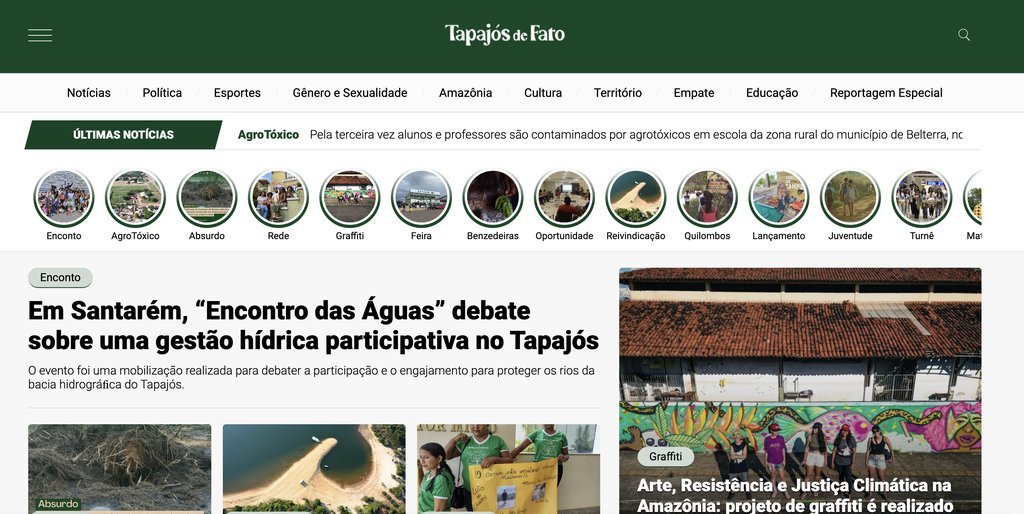
Tapajós de Fato, a popular communication collective, does independent journalism in western Pará. Its work began during the Covid-19 pandemic in 2020, denouncing rights violations and fighting fake news and denialism. Working digitally from the start, TdF's journalism has always been present on the organization's website and on social media (Facebook and Instagram, initially).

In 2021, due to the collapse of a mining tailings dam in the municipality of Juruti, which destroyed crops and the stream that guaranteed the livelihood of two traditional communities, TdF began producing podcasts. They currently produce three series of podcasts: the "Tapajós de Fato" podcast, which covers general topics; "Falas pela Ação Climática" (Talks for Climate Action), where they address the issue of Climate Justice in the daily lives of Amazonians, from the economic to the cultural context; and the "Tinha que ser mulher" (It had to be a woman) podcast, which reports on the existence of women in places such as academia, activism, and the social movement.

In three years of operation, the news portal has more than 100 articles. Doing journalism of resistance, echoing the voices of silenced populations and those made invisible by the system and the mass media in the Amazon, denouncing violations of socio-environmental, agrarian, and humanitarian rights has resulted in a series of threats and physical and digital attacks against the group's collaborators. This led them to rethink the team's action strategies and to implement a physical and digital security plan in order to guarantee the integrity of everyone.

TdF was set up as a non-profit association under private law on August 13, 2021, and registered with the 2nd Office of the Civil Registry of Legal Entities under No. 0015545 on December 9, 2021.

Source: AJOR

Last updated date: July 2024

Location:
Santarém, Brazil
Year the organization started publishing:
2020
Languages:
Portuguese
Type of coverage:
Regional
Area of coverage:
Norte;Amazônia

Content

Type of content produced by theme:
Science
Education
Environment
Politics
Economy and business
Lifestyle
Health and well-being
Entertainment and culture
Law and crime
Society and human rights
Entrepreneurship
Economy and finance
Journalism industry
Gender
Feminism
LGBTIQ+
Ethnic minorities
Religious minorities
DEIA: Diversity, equity, inclusion and accessibility
Refugees
Migration
Journalism genres:
Reviews
Interviews and reporting
Information services
Opinion
Investigative journalism
Narrative journalism
Journalism coverage types and techniques:
Breaking news
Live coverage of events
Data journalism
Solutions or constructive journalism
Engaged, community-driven or participatory journalism
Explanatory journalism
Collaborative journalism
Fact-checking
Curated/aggregated content
Tech platforms and other mediums used:
Website
Messaging service
Telegram
WhatsApp
Signal
Social media platforms
Twitter
Facebook
Instagram
Tiktok
LinkedIn
Radio streaming
Podcast
YouTube
Print

Audience and reach

Social media audience

Facebook number of followers:
2,400
Twitter number of followers:
2,359
Instagram number of followers:
20,800
YouTube number of followers:
21
Tiktok number of followers:
13,000

Management and team

Founders

Female:
1
Male:
1
Founders:
Marcos Wesley, Isabelle Maciel
Directors:
Isabelle Maciel, Sueli Pedroso, Heleize Galúcio, Marta Costa, José Marcos Tapajós

Team

Full-time employees:
13
Part-time employees:
1
Freelancers or consultants:
13
Volunteers:
6

Business structure and revenue sources

Organization tax status:
Non-profit
All revenue sources reported by media leaders:
Grants
Consultancy services
Content services for others
Other
Grants from private donor organisations
Grants or investment from philanthropic organisations
Grants from United Nations, UNESCO, and other agencies
Services for clients and other private corporations
Services for nonprofit organisations
Training services for journalists
Training services for other clients
Product development and sales
Content development for other media
Content development for other non-journalistic companies
Content development for NGOs
The primary source of revenue reported by media leaders:
Grants
The second most important revenue source reported:
Consultancy services
Others revenue sources:
Editais Públicos - leis de incentivo de cultura (lei Aldir Blanc, lei Paulo Gustavo)

Transparency

Publishes information about annual revenue
Publishes the names of donors
Has an ethics policy / manual
Doesn’t publish an ethics policy / manual
Has a data privacy policy
Doesn’t publish a data privacy policy
Has a whistleblower policy
Doesn’t publish a whistleblower policy
Doesn’t have a complaints policy
Has a sexual harassment or institutional violence policy
Doesn’t publish a sexual harassment or institutional violence policy
Is signed up to a press regulator, trust initiative, or part of a press association
Publishes up to date information about its team

Why is this profile included?

This media outlet is part of our directory because it meets SembraMedia’s inclusion criteria: it produces original content, serves the public interest, and works with independence and transparency. This profile was developed using information provided directly by the media outlet, through surveys or interviews. We aim to keep the information current, but SembraMedia does not guarantee its accuracy or completeness, and recommends verifying any key details with the media organization.

In SembraMedia we use own and third party cookies for analytical purposes that allow us to track, monitor and analyze your browsing and behavior to make improvements to the product based on the analysis made, as well as own technical cookies that allow the proper functioning of the website. You can accept all cookies by clicking the "Accept" button or configure or reject their use by clicking "Reject". More information in the Privacy and Cookies Policy.